
Choose a transcription workflow
Songscription alternatives
Getting the notes is only the first step. Choose a tool that also gives you a file you can work with, a way to correct mistakes and a price you can check before committing.
Checked
Choose for the work after transcription
Songscription already handles sheet music, TAB and multi-instrument recordings. Switching makes sense when another workflow solves a specific problem: you need jianpu, prefer a desktop editor, want MIDI inside a DAW, or would rather bring an existing score into an AI-assisted workspace. There is no accuracy winner established by this comparison.
Six tools with different jobs
| Tool | A reason to consider it | Check before you move |
|---|---|---|
| ScoreStarling | Recordings and existing scores in one workspace, with notation, TAB, jianpu and AI-assisted changes | Editable downloads require Plus or a purchased credit pack; check the preview before spending credits |
| Klangio | Instrument-specific transcription, full-mix Studio and DAW plugins | Choose the product you actually need; the free demo doesn't include its editor |
| AnthemScore | Desktop transcription and detailed note correction | Desktop editions and the separate Web subscription have different export rules |
| Spotify Basic Pitch | Audio-to-MIDI for a clear recording of one instrument | You'll still need a DAW or notation editor to finish the result |
| MuseScore Studio | Editing, arranging and laying out an existing MIDI or MusicXML score | This is a notation editor, not a like-for-like audio transcription service |
| Songscription | Keeping transcription, piano-roll editing and Annie in the browser | Staying may be simpler if its outputs already fit your work |
When ScoreStarling fits
You can start from a recording, a printed score PDF, or your own MIDI and MusicXML files. Recordings have separate choices for one instrument or voice, solo piano, and a band. A band result has separate instrument parts, including drums. You can listen beside the original, edit notes, keep versions and prepare a different notation view without starting a new project in another tool.
For example, a player who already has a MusicXML file can open it, transpose it and prepare TAB or jianpu. Someone starting with a band recording can inspect the parts before deciding which one to work on. Those are different tasks, even though both end with a score.
The current limits are 6 minutes for one instrument or solo piano and 30 minutes for a band. A one-instrument or piano piece costs 10 credits; band transcription costs 30 credits per minute after you confirm the displayed price. Each piece starts with a 30-second preview. Free accounts receive 100 credits per month. See the download and pricing details.
Pick the file your next app needs
A PDF is useful for reading and printing. It doesn't preserve the same editable structure as MusicXML. If you plan to continue in MuseScore, Dorico or Sibelius, try a MusicXML export and inspect the voices and layout there. For a DAW, check the MIDI tracks, tempo and instrument assignments. For Guitar Pro, check the strings and frets in the exported file.
ScoreStarling exports MusicXML, MIDI and Guitar Pro 5 files with Plus or a purchased credit pack. Its TAB can also be read as text or printed. File exchange can still require cleanup; exporting a supported format isn't a promise that every application will reproduce the same layout or playback.
When another option is a better fit
Klangio is worth checking if you want a dedicated guitar, bass or drum workflow, or a MIDI plugin in your DAW. Its product family also includes full-mix transcription, so compare the relevant app rather than assuming Klangio only handles solo piano.
AnthemScore offers desktop editions for people who prefer that workflow. Professional and Studio include editable MIDI and MusicXML exports; Lite has a narrower role. Its Web service is a separate offer. Read the edition terms rather than treating the desktop and web trials as interchangeable.
Basic Pitch is useful when you want MIDI from one instrument and are comfortable doing the notation work yourself. It supports polyphonic notes, but that doesn't mean it separates a band into instrument tracks. MuseScore Studio can then open MIDI or MusicXML for editing and page layout.
When staying with Songscription makes sense
If you already like its editor and Annie, check whether the feature you need is now available before switching. Its official FAQ lists multi-instrument transcription, drums and natural-language changes. Its pricing page distinguishes the 30-second free tier from a 14-day trial of two-minute transcriptions, with editable downloads on paid plans. Paid transcriptions are listed at up to 15 minutes per recording.
Test the passage that gives you trouble
Use a short recording you have permission to upload. Include the moment that matters: a bass line under a busy chorus, a piano chord with pedal, or a rhythm that keeps coming out wrong. Listen to the result, try one correction, and open an export in your usual software. That tells you more about switching than a long feature checklist.
Try a band recordingTry solo piano
Inspect real historical results
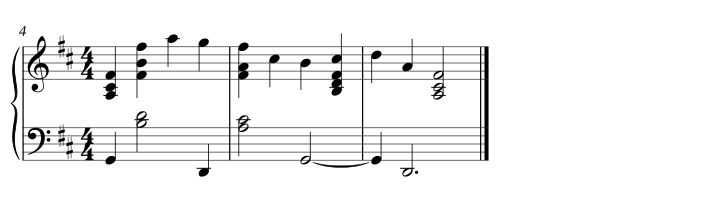
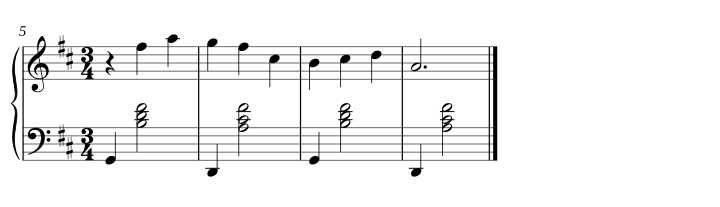
A piano draft and its revision
These excerpts come from the public-domain Gymnopédie No. 1 recording by Robin Alciatore. The October 12, 2026 draft put this twelve-beat passage in 4/4; the revised version uses 3/4 and moves the left-hand chords onto the lower staff. They show actual saved results, not a new transcription or a comparison with another service.
Download the piano recording · Draft MusicXML · Revised MusicXML
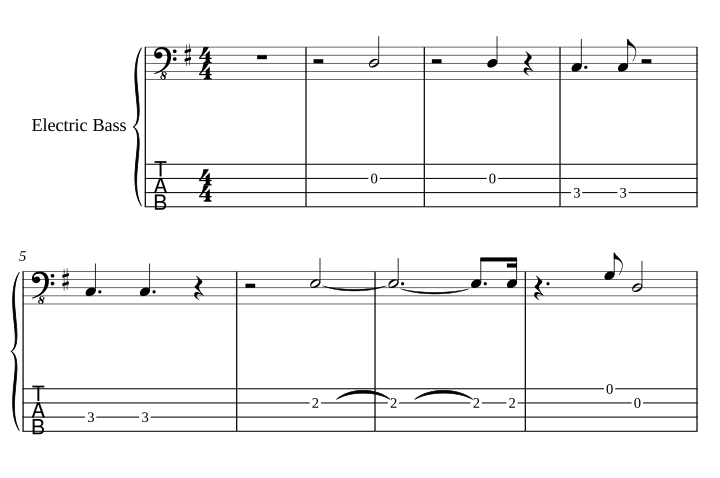
A bass part from a multi-instrument result
The Slakh example is a historical, uncorrected multi-instrument transcription from October 2, 2026, with separate bass and drum parts. Its source is a synthesized dataset recording. The excerpt below shows the bass part converted to four-string TAB without correcting its notes.
Download the source mix · Full transcribed MusicXML · Transcribed MIDI · Bass excerpt downloads
Slakh2100 Track01881 is CC BY 4.0; the piano recording is public domain. See the sources, attribution and derivation details. These examples do not establish an accuracy ranking between products.
Sources
Features checked October 19, 2026 from Songscription FAQ, Songscription pricing, Klangio demo rules, AnthemScore editions, Basic Pitch and the MuseScore handbook. This page is written by ScoreStarling. Product descriptions are not a controlled accuracy comparison.
Questions and answers
Is there a free Songscription alternative?
Spotify Basic Pitch is an open-source audio-to-MIDI option, and MuseScore Studio is a free notation editor for the next step. ScoreStarling offers a 30-second preview and 100 monthly credits on free accounts. A preview isn't the same as a free editable export; check the download rules before choosing.
Should I switch from Songscription to Klangio?
Try the same short passage in the specific products you would use. Songscription combines transcription, score and piano-roll editing, and its Annie assistant. Klangio has instrument-specific tools, Transcription Studio and DAW plugins. Your next editing step matters more than a blanket ranking.
Which option can produce jianpu?
ScoreStarling can show a score as numbered notation, or jianpu, and export a jianpu PDF. You can also open an existing MusicXML or MIDI file, rather than transcribing the recording again. Check the result before printing.
Can I work on the score in ChatGPT or Claude?
ScoreStarling has a remote MCP connection for supported AI assistants. You can ask for score operations through that connection; embedded panels and available interactions depend on the host. See the connection guide.